

Conversas com Cinema© PROSA
Ciclo
TEMPORALIDADE E DECADÊNCIA: 2 FILMES DE KELLY REICHARDT
CINELAB/IFILNOVA, no âmbito do projecto Cinema and Ecosophy: Values, Eco Narratives and Deep Ecology (2024.16542.PEX) / FCT
[TEMPORALITY AND DECAY: 2 FILMS BY KELLY REICHARDT Cinema Screenings]
Curadoria de Henrique Brazão
Kelly Reichardt (n. 1964), nome maior do cinema independente norte-americano contemporâneo, é principalmente uma cineasta do tempo. Com obra associada pela crítica e pela academia à premência de um “cinema lento” no circuito de festivais de cinema nas primeiras décadas do novo milénio – aproximação controversa de universos heterogéneos onde coabitam Pedro Costa, Béla Tarr e Tsai Ming-liang – será mais justo caracterizá-la para além de operações de ritmo que emergem inevitavelmente por comparação com outras cinematografias. As temporalidades de Reichardt não privilegiam a contemplação nem criam refúgios de pausa ou contrapontos de uma suposta vertigem do fluxo interminável de imagens, num mundo inerentemente veloz. A delonga, espera ou estagnação são consequências da economia de atenção que o seu gesto propõe: o foco nas margens de um outro curso de eventos maiores, um grande plano de interações microscópicas entre pessoas, animais e paisagens rurais e industriais, motivos ubíquos nos seus filmes, despojos de projetos históricos e económicos por resolver.
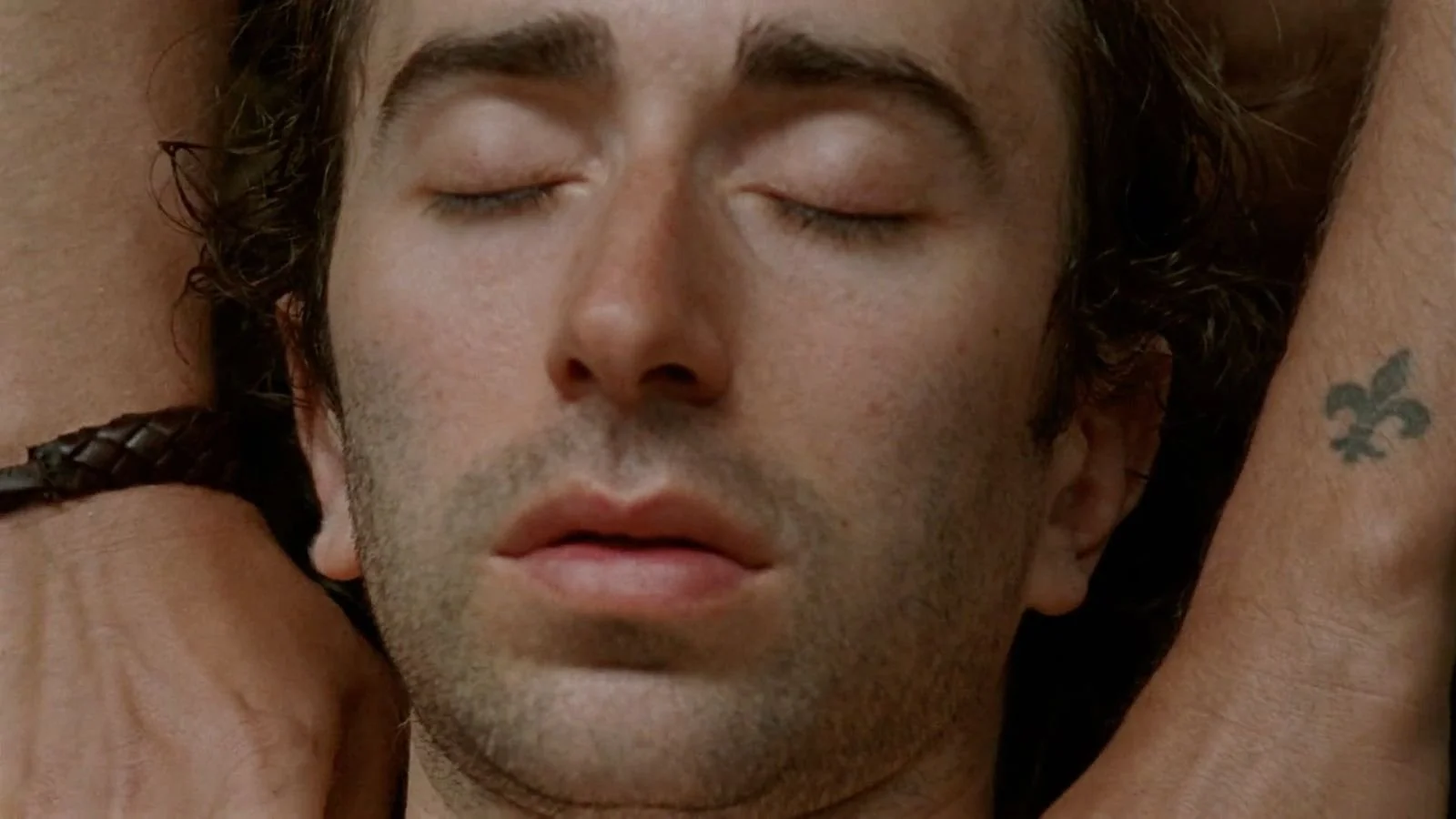
Escrito a partir de um conto de Jon Raymond, Old Joy (2006), segunda longa-metragem de Reichardt após um hiato de mais de uma década, é um tratado de economia temporal e narrativa. Registo minucioso da silenciosa deterioração de uma amizade na reclusão bucólica de umas termas no estado do Oregon, Old Joy descobre o extraordinário na banalidade e vai construindo ideias de impermanência, sempre com uma postura cética, quase fatalista. As formas do filme – assumidamente afetadas pelo sistema de produção e orçamento reduzidíssimo, até para os padrões do cinema independente – de austeridade palpável, são permeáveis ao ar dos tempos. O ambiente político de apreensão nos Estados Unidos de George W. Bush pós-11 de setembro penetra a diegese através de intermináveis programas de rádio de comentário e opinião política, numa negociação constante entre pequena e larga escala, materializada em horas de espera, diálogos encravados e uma viagem sem resolução.
Em Wendy and Lucy (2008) Reichardt colabora com Raymond na escrita do argumento, dando continuidade ao projeto de desvelo de estruturas em decomposição, aqui na exposição de sucessivos falhanços institucionais no percurso condenado de uma mulher desprotegida. Início da parceria com a atriz Michelle Williams, o filme consolidou Reichardt como cineasta de um novo neorrealismo, voz das preocupações sociais atualizadas do século XXI sem o niilismo do mumblecore nem o moralismo dos indies quirky abundantes na década de 2000. Arcos narrativos sem hipótese de catarse, entraves sistemáticos à agência da protagonista, e o peso institucional sobre as relações humanas e animais: Wendy and Lucy assume pela montagem – sempre a cargo da realizadora – a construção de uma temporalidade de aparente estagnação, e inevitável decadência.
Integrado nos trabalhos do projeto “Cinema and Ecosophy: Values, Econarratives and Deep Ecology”, o ciclo sublinha também um motivo transversal à obra de Reichardt: a atenção à paisagem enquanto espaço moldado pela ação humana, pela precariedade económica e pelas marcas de projetos históricos falhados. Ainda que Night Moves (2013) represente a formulação mais explícita dessas preocupações ecológicas, em Old Joy e Wendy and Lucy Reichardt atesta formas de desgaste inscritas no espaço e nas relações entre humanos, animais e território. A natureza nunca surge como refúgio idealizado ou exterior ao mundo social, mas como extensão dessas mesmas estruturas de exaustão, abandono e instabilidade.
(Curadoria de Henrique Brazão)
_ENG
Kelly Reichardt (b. 1964), one of the major figures of contemporary American independent cinema, is above all a filmmaker of time. Although her work has often been associated by critics and scholars with the urgency of “slow cinema” within the international festival circuit of the early twenty-first century — a controversial grouping of heterogeneous cinematic worlds inhabited equally by Pedro Costa, Béla Tarr, and Tsai Ming-liang — it may be more accurate to define her beyond questions of rhythm that inevitably emerge through comparison with other film traditions. Reichardt’s temporalities do not privilege contemplation, nor do they create refuges of stillness or counterpoints to the supposed vertigo of an endlessly accelerated image-flow in an inherently fast world. Delay, waiting, and stagnation arise instead as consequences of the economy of attention proposed by her cinematic gesture: a focus on the margins of larger currents of events, a vast tableau of microscopic interactions between people, animals, and rural or industrial landscapes — ubiquitous motifs throughout her films — remnants of unresolved historical and economic projects.
Written from a short story by Jon Raymond, Old Joy (2006), Reichardt’s second feature film after a hiatus of more than a decade, is a study in temporal and narrative economy. A meticulous record of the silent deterioration of a friendship within the bucolic isolation of hot springs in Oregon, Old Joy discovers the extraordinary within banality while gradually constructing ideas of impermanence, always through a skeptical, almost fatalistic perspective. The film’s forms — openly shaped by its production system and extremely limited budget, even by independent cinema standards — possess a palpable austerity that remains permeable to the atmosphere of its historical moment. The political climate of anxiety in George W. Bush’s post-9/11 America infiltrates the diegesis through endless radio programmes of political commentary and opinion, creating a constant negotiation between small and large scales, materialised in hours of waiting, stalled conversations, and a journey without resolution.
In Wendy and Lucy (2008), Reichardt collaborates once again with Raymond on the screenplay, continuing her project of unveiling structures in decomposition, here through the exposure of successive institutional failures along the condemned trajectory of an unprotected woman. Marking the beginning of her collaboration with actress Michelle Williams, the film consolidated Reichardt as a filmmaker of a new neorealism — a voice for the renewed social concerns of the twenty-first century, without the nihilism of mumblecore or the moralism of the quirky indies that proliferated throughout the 2000s. Narrative arcs devoid of catharsis, systematic obstacles to the protagonist’s agency, and the institutional weight imposed upon human and animal relations: through editing — always undertaken by Reichardt herself — Wendy and Lucy constructs a temporality of apparent stagnation and inevitable decay.
Developed within the framework of the project “Cinema and Ecosophy: Values, Econarratives and Deep Ecology,” this cycle also highlights a transversal motif within Reichardt’s work: her attention to landscape as a space shaped by human action, economic precarity, and the traces of failed historical projects. Although Night Moves (2013) represents the most explicit articulation of these ecological concerns, in Old Joy and Wendy and Lucy Reichardt already reveals forms of exhaustion inscribed within spaces and within the relationships between humans, animals, and territory. Nature never emerges as an idealised refuge or as something external to the social world, but rather as an extension of those same structures of exhaustion, abandonment, and instability.
(Curatorship by Henrique Brazão)
“OLD JOY” 2006 | M/12 | 1h16’ [US]
De Kelly Reichardt
Sexta Dia 05/06 às 19h30 [Friday 06/05 at 7:30pm]
Dois velhos amigos reencontram-se para acampar nas montanhas Cascade, no Oregon.
Two old friends reunite for a camping trip in the Cascade Mountains of Oregon.
Spoken in English | Subtitled in Portuguese
“WENDY AND LUCY” 2008 | M/12 | 1h20’ [US]
De Kelly Reichardt
Sábado Dia 06/06 às 19h30 [Saturday 06/06 at 7:30pm]
Ao longo do verão, uma sucessão de acontecimentos infelizes desencadeia uma crise financeira na vida de uma jovem mulher, que vê lentamente o seu mundo desmoronar-se.
Over the summer, a series of unfortunate happenings triggers a financial crisis for a young woman and she soon finds her life falling apart.
Spoken in English | Subtitled in Portuguese
Todos os filmes do Cinema PROSA serão exibidos em pixel iluminado (ecrã QLED 65’’) em sala condicionada ao máximo de 24 espectadores.
Preçário
Membros: Entrada livre.
Não-membros: Donativo sugerido de 3€
All Cinema PROSA films will be shown on an illuminated pixel (65’’ QLED screen) in a room with a maximum capacity of 24 spectators.
Prices
Members: Free Entry.
Non-members: Suggested donation of 3€.
Trailers: