

Conversas com Cinema© PROSA
Ciclo
PENSO LOGO ESCREVO VI
["I THINK, THEREFORE I WRITE VI" Cinema Screenings]
Curadoria de Alexandre Braga
O ciclo PENSO LOGO ESCREVO nasce da oficina de Escrita Criativa da PROSA como um espaço de escuta interior e criação de ficção. Parte de uma convicção simples: escrever é uma forma de pensar o mundo e de nos pensarmos dentro dele. Ao trabalhar com princípios da narratologia e da representação do real, a oficina procura exercitar uma escrita que não se limita a contar histórias, mas que constrói lugares interiores. Escrever torna-se, assim, um gesto de descoberta — uma forma de procurar o “si próprio” que ora se revela em nós, ora nos outros. Mais do que técnica, trata-se de um exercício de presença e de imaginação: criar linguagem como quem abre um espaço habitável dentro da experiência humana.
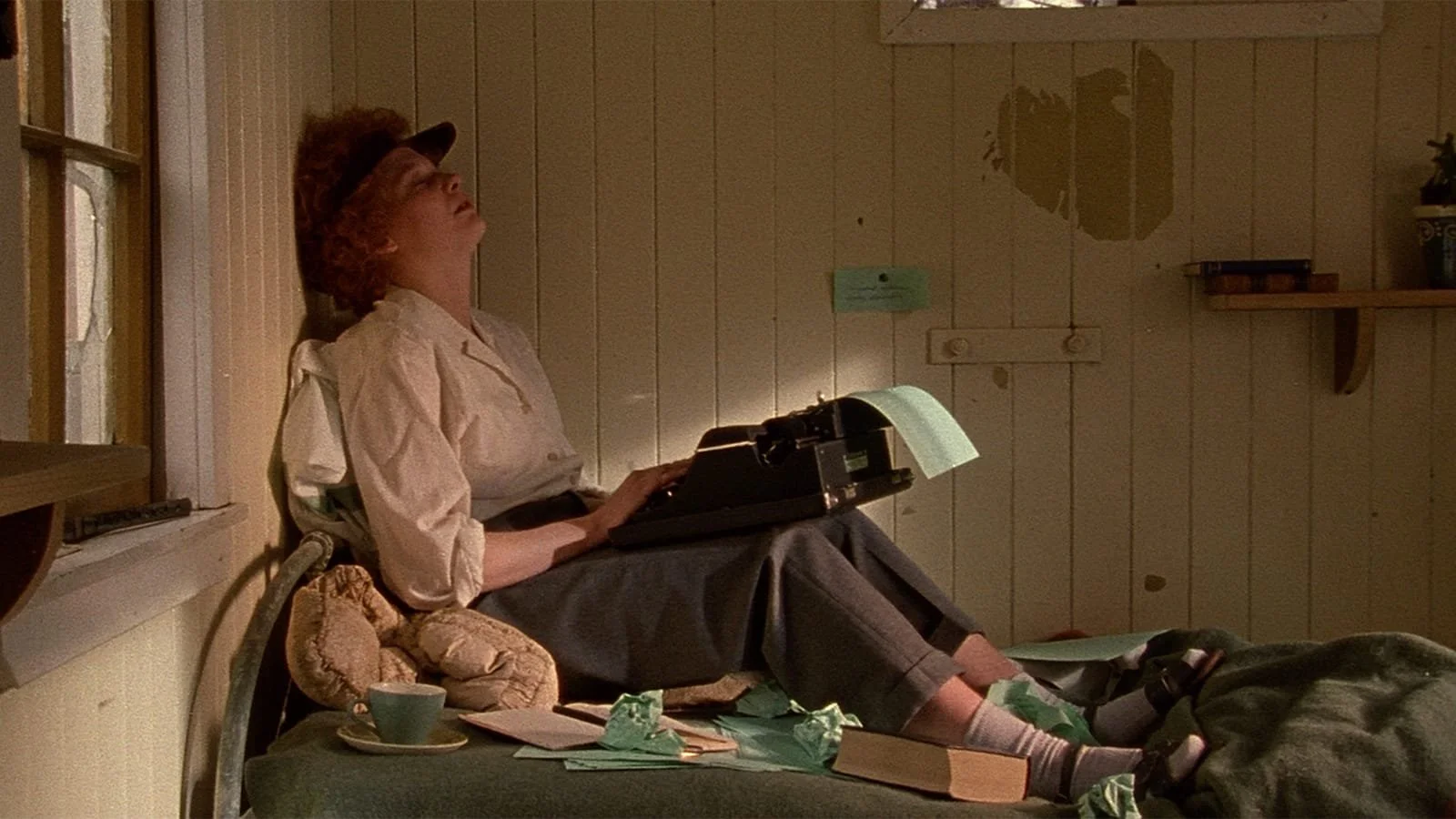
Nesta sexta edição, encontramos em An Angel at My Table (1990) uma das mais belas representações cinematográficas da relação entre a escrita e a construção da identidade. Baseado na autobiografia da escritora Janet Frame, o filme acompanha uma vida atravessada pela vulnerabilidade, pela exclusão e pela incompreensão, revelando a forma como a criação literária se pode transformar num instrumento de permanência e reconstrução.
Durante muitos anos, Janet foi definida pelo olhar dos outros. A sua extrema timidez, as dificuldades de integração e um diagnóstico psiquiátrico errado conduziram-na a um longo período de internamento que quase interrompeu o seu percurso. No entanto, é precisamente nesse espaço de silêncio e isolamento que a escrita começa a afirmar-se como uma força capaz de preservar aquilo que parecia estar prestes a desaparecer.
Jane Campion filma este processo com uma delicadeza rara. Em vez de construir uma narrativa centrada na doença, interessa-lhe revelar a lenta formação de uma consciência criadora. O gesto de escrever surge não como um ato de fuga, mas como uma forma de organizar a experiência, atribuir significado à memória e recuperar uma voz própria.
O que acontece quando a linguagem deixa de ser apenas um meio de comunicação e passa a ser um lugar de habitação? Será possível escrever para compreender aquilo que ainda não sabemos sobre nós próprios?
Talvez a literatura exista precisamente para responder a estas perguntas. Afinal, muitas vezes não escrevemos porque já sabemos quem somos. Escrevemos porque procuramos descobrir. An Angel at My Table recorda-nos que a escrita não transforma apenas a realidade em narrativa. Por vezes, transforma a própria vida numa possibilidade de reencontro.
E talvez seja essa a sua dimensão mais profunda: permitir-nos reconstruir, através das palavras, aquilo que o mundo parecia ter fragmentado.
(Curadoria de Alexandre Braga)
_ENG
The PENSO LOGO ESCREVO (I Think, Therefore I Write) cycle emerged from PROSA's Creative Writing workshop as a space for inner listening and the creation of fiction. It is built upon a simple conviction: writing is a way of thinking about the world while simultaneously thinking about ourselves within it. By working with principles of narratology and the representation of reality, the workshop seeks to cultivate a form of writing that goes beyond storytelling and instead creates inner landscapes. Writing thus becomes an act of discovery — a way of searching for the self that is sometimes revealed within us and sometimes through others. More than a technical exercise, it is an exercise in presence and imagination: creating language as one might create a habitable space within human experience.
In this sixth edition, we encounter one of cinema's most beautiful portrayals of the relationship between writing and the construction of identity. Based on the autobiography of New Zealand writer Janet Frame, An Angel at My Table (1990) follows a life shaped by vulnerability, exclusion, and misunderstanding, revealing how literary creation can become a powerful instrument of preservation and reconstruction.
For many years, Janet was defined by the way others perceived her. Her extreme shyness, difficulties with social integration, and an incorrect psychiatric diagnosis led to a long period of institutionalisation that nearly interrupted her life as a writer. Yet it is precisely within this space of silence and isolation that writing begins to emerge as a force capable of preserving what seemed on the verge of disappearing.
Jane Campion approaches this journey with remarkable sensitivity. Rather than constructing a narrative centred on illness, she is interested in portraying the gradual formation of a creative consciousness. Writing appears not as an act of escape, but as a way of organising experience, giving meaning to memory, and reclaiming one's own voice.
What happens when language ceases to be merely a means of communication and becomes a place of habitation? Is it possible to write in order to understand what we do not yet know about ourselves?
Perhaps literature exists precisely to answer these questions. After all, we do not always write because we already know who we are. Sometimes, we write because we are still trying to find out. An Angel at My Table reminds us that writing does not simply transform reality into narrative. Sometimes, it transforms life itself into an opportunity for rediscovery.
And perhaps that is its deepest power: allowing us to rebuild, through words, what the world once seemed to fragment.
(Curatorship of Alexandre Braga)
“AN ANGEL IN MY TABLE” 1990 | M/12 | 2h38’ [NZ/AUS/UK]
De Jane Campion
Sexta Dia 18/09 às 19h30 [Friday 09/18 at 7:30pm]
Janet Frame foi uma criança de inteligência invulgar que, na adolescência, foi erradamente diagnosticada com esquizofrenia. O filme acompanha a sua descoberta do mundo e o percurso que a leva da Nova Zelândia à Europa, enquanto a sua obra literária começa a ser reconhecida e aclamada internacionalmente.
Janet Frame was a brilliant child who, as a teen, was misdiagnosed with schizophrenia. Explore Janet's discovery of the world and her life in Europe as her books are published to acclaim.
Spoken in English | Subtitled in Portuguese
Todos os filmes do Cinema PROSA serão exibidos em pixel iluminado (ecrã QLED 65’’) em sala condicionada ao máximo de 24 espectadores.
Preçário
Membros: Entrada livre.
Não-membros: 3€
All Cinema PROSA films will be shown on an illuminated pixel (65’’ QLED screen) in a room with a maximum capacity of 24 spectators.
Prices
Members: Free Entry.
Non-members: Suggested donation of 3€.
Trailers: