

Conversas com Cinema© PROSA
Ciclo
PENSO LOGO ESCREVO V
["I THINK, THEREFORE I WRITE V" Cinema Screenings]
Curadoria de Alexandre Braga
O ciclo de cinema PENSO LOGO ESCREVO nasce da oficina de Escrita Criativa da PROSA como um espaço de escuta interior e criação de ficção. Parte de uma convicção simples: escrever é uma forma de pensar o mundo e de nos pensarmos dentro dele. Ao trabalhar com princípios da narratologia e da representação do real, a oficina procura exercitar uma escrita que não se limita a contar histórias, mas que constrói lugares interiores. Escrever torna-se, assim, um gesto de descoberta — uma forma de procurar o “si próprio” que ora se revela em nós, ora nos outros. Mais do que técnica, trata-se de um exercício de presença e de imaginação: criar linguagem como quem abre um espaço habitável dentro da experiência humana.
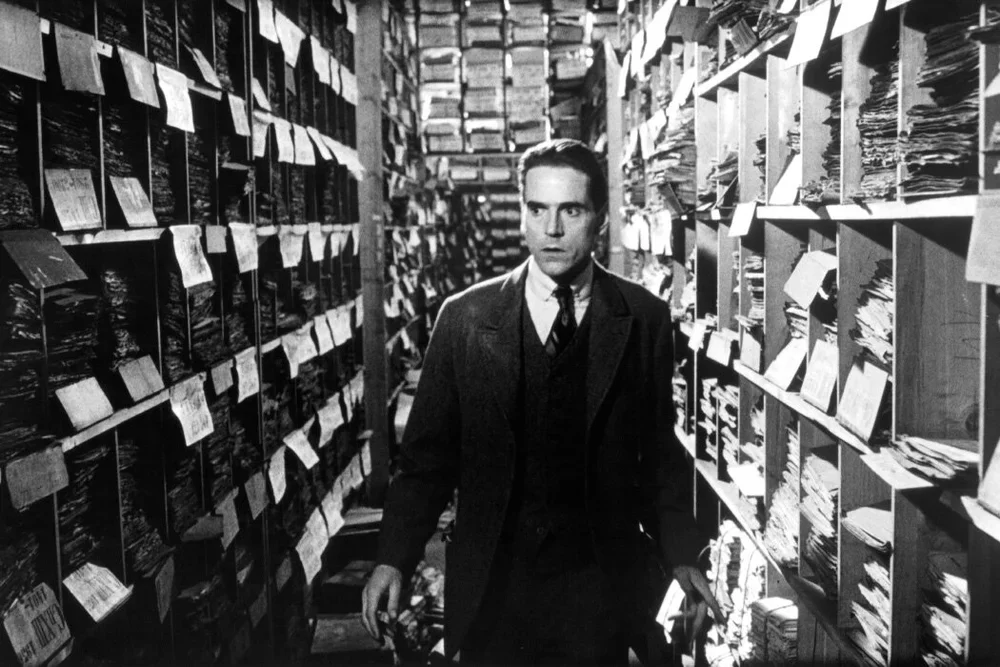
É nesse horizonte que surge “KAFKA” (1991), de Steven Soderbergh. O filme imagina a vida do escritor Franz Kafka em Praga como se ele próprio estivesse aprisionado dentro de um dos seus romances. Funcionário de seguros durante o dia e escritor durante a noite, Kafka atravessa uma cidade de corredores sombrios, burocracias opacas e sociedades secretas que parecem saídas diretamente das páginas de O Processo ou O Castelo. A realidade e a ficção começam lentamente a confundir-se, até que o mundo exterior adquire a lógica inquietante das histórias que ele próprio escreve.
O filme trabalha precisamente sobre essa vertigem: a escrita como capacidade de produzir mundos que, pouco a pouco, nos engolem. Para Kafka, escrever não é um passatempo nem um exercício literário; é um mergulho absoluto na imaginação. Os seus textos constroem sistemas de poder invisíveis, tribunais sem rosto, labirintos administrativos onde o indivíduo se perde. Mas, ao fazê-lo, revelam também algo profundo sobre a experiência moderna: a sensação de que habitamos estruturas que não compreendemos totalmente. A ficção torna-se, assim, uma forma de revelar o real.
Soderbergh filma essa ideia de maneira quase literal. Grande parte do filme é construída em preto-e-branco austero, evocando o expressionismo europeu e a atmosfera mental das narrativas kafkianas. Quando a história entra no território do delírio conspirativo e do fantástico, a cor irrompe subitamente. Como se a imaginação abrisse uma fissura na própria matéria do mundo. O escritor que tenta compreender o seu tempo descobre que o único modo de o fazer é atravessar os seus próprios pesadelos narrativos.
Neste sentido, “KAFKA” não é apenas um filme sobre um autor; é um filme sobre o risco de escrever. Criar histórias significa inventar realidades possíveis — e aceitar que, durante o processo, passamos a viver dentro delas. Muitos escritores conhecem esse estado paradoxal: personagens que continuam a existir depois de fecharmos o caderno, mundos que insistem em reorganizar a nossa perceção da vida quotidiana. A escrita transforma-se numa espécie de laboratório existencial.
É exatamente essa experiência que a oficina PENSO LOGO ESCREVO procura explorar. Escrever não é apenas produzir textos; é entrar num território onde imaginação, memória e realidade começam a dialogar de formas inesperadas. Como no universo de Kafka, a ficção pode revelar aquilo que a superfície do mundo tende a esconder. E, ao mesmo tempo, pode exigir de quem escreve um mergulho profundo — uma travessia por vezes inquietante, onde pensar e existir se tornam inseparáveis.
Talvez por isso tantos escritores descrevam a escrita como uma forma intensa de vida. Criamos mundos para compreendermos o nosso, mas também para o ultrapassar. Habitamos as histórias que inventamos. E, por instantes, quase desaparecemos dentro delas. Porque escrever é, em última instância, aceitar esse risco: o de entrar num universo imaginado e descobrir que ele nos transformou.
(Curadoria de Alexandre Braga)
_ENG
The PENSO LOGO ESCREVO (I THINK, THEREFORE I WRITE) cinema cycle emerges from PROSA’s Creative Writing workshop as a space for inner listening and the creation of fiction. It begins from a simple conviction: writing is a way of thinking about the world and of thinking ourselves within it. Working with principles of narratology and the representation of the real, the workshop encourages a form of writing that does more than tell stories — it constructs interior places. Writing thus becomes a gesture of discovery: a way of searching for the “self” that sometimes reveals itself within us and sometimes through others. More than technique, it is an exercise in presence and imagination — creating language as one might open a habitable space within human experience.
It is within this horizon that Kafka (1991), by Steven Soderbergh, finds its place. The film imagines the life of the writer Franz Kafka in Prague as though he himself were trapped inside one of his own novels. A humble insurance clerk by day and a writer by night, Kafka moves through a city of shadowy corridors, opaque bureaucracies and secret societies that seem to emerge directly from the pages of The Trial or The Castle. Reality and fiction slowly begin to blur until the external world acquires the unsettling logic of the stories he writes.
The film explores precisely this vertigo: writing as the ability to create worlds that gradually begin to consume us. For Kafka, writing is not a pastime or a literary exercise; it is an absolute immersion in imagination. His texts construct invisible systems of power, faceless tribunals and administrative labyrinths in which the individual becomes lost. Yet in doing so they reveal something essential about modern experience: the feeling that we inhabit structures we cannot fully understand. Fiction thus becomes a way of uncovering the real.
Soderbergh renders this idea almost literally on screen. Much of the film unfolds in stark black and white, evoking European expressionism and the mental atmosphere of Kafka’s narratives. When the story moves into territory closer to conspiracy and the fantastic, colour suddenly appears. It is as if imagination itself were opening a fissure in the fabric of reality. The writer who seeks to understand his time discovers that the only way to do so is by passing through the narrative nightmares he himself has created.
In this sense, “KAFKA” is not merely a film about an author; it is a film about the risk of writing. To create stories is to invent possible realities — and to accept that, in the process, we begin to live within them. Many writers recognise this paradoxical state: characters who continue to exist long after the notebook is closed, worlds that insist on reshaping our perception of everyday life. Writing becomes a kind of existential laboratory.
This is precisely the experience that the PENSO LOGO ESCREVO workshop seeks to explore. Writing is not only about producing texts; it is about entering a territory where imagination, memory and reality begin to interact in unexpected ways. As in Kafka’s universe, fiction can reveal what the surface of the world tends to conceal. At the same time, it demands a deep immersion from those who write — a journey that is sometimes unsettling, where thinking and existing become inseparable.
Perhaps that is why so many writers describe writing as an intense form of life. We create worlds in order to understand our own, but also to transcend it. We inhabit the stories we invent. And for brief moments we almost disappear inside them. Because to write is, ultimately, to accept that risk: to enter an imagined universe and discover that it has quietly transformed us.
(Curatorship of Alexandre Braga)
Ciclo PENSO LOGO ESCREVO V
[I THINK, THEREFORE I WRITE V Cinema Screenings] (Curadoria de Alexandre Braga)
“KAFKA” 1991 | M/12 | 1h31’ [US\FR]
De Steven Soderbergh
Sábado Dia 16/05 às 19h30 [Saturday 05/16 at 7:30pm]
Inspirado no universo literário de Franz Kafka, o filme segue um funcionário de seguros em Praga que se envolve numa conspiração enigmática após a morte de um colega. Realidade e pesadelo confundem-se num mundo burocrático e opressivo.
Inspired by Franz Kafka’s literary universe, the film follows an insurance clerk in Prague who becomes entangled in a mysterious conspiracy after a colleague’s death. Reality and nightmare blur in a bureaucratic and oppressive world.
Spoken in English | Subtitled in Portuguese
Todos os filmes do Cinema PROSA serão exibidos em pixel iluminado (ecrã QLED 65’’) em sala condicionada ao máximo de 24 espectadores.
Preçário
Membros: Entrada livre.
Não-membros: 3€
All Cinema PROSA films will be shown on an illuminated pixel (65’’ QLED screen) in a room with a maximum capacity of 24 spectators.
Prices
Members: Free Entry.
Non-members: Suggested donation of 3€.
Trailers: