

Conversas com Cinema© PROSA
Ciclo
PENSO LOGO ESCREVO IV
["I THINK, THEREFORE I WRITE IV" Cinema Screenings]
O ciclo PENSO LOGO ESCREVO é o nome da oficina de Escrita Criativa que a PROSA propõe como espaço de escuta interior e criação de ficção, partindo de um olhar para a narratologia e para a representação do real. Trata-se de exercitar uma escrita que nos ponha em contacto com o ‘si próprio’ — esse ser que ora se revela em nós, ora no outro —, construindo linguagem como quem constrói um lugar. Escrever é um gesto de busca, uma procura do ser. Um ato liberto que, para além de aprimorar competências comunicativas, se apresenta como um instrumento de cuidado, de resistência e de reinvenção de si mesmo. Num mundo cada vez mais exigente em criatividade, escrever é também uma forma de subsistência — emocional, simbólica e, por vezes, física.
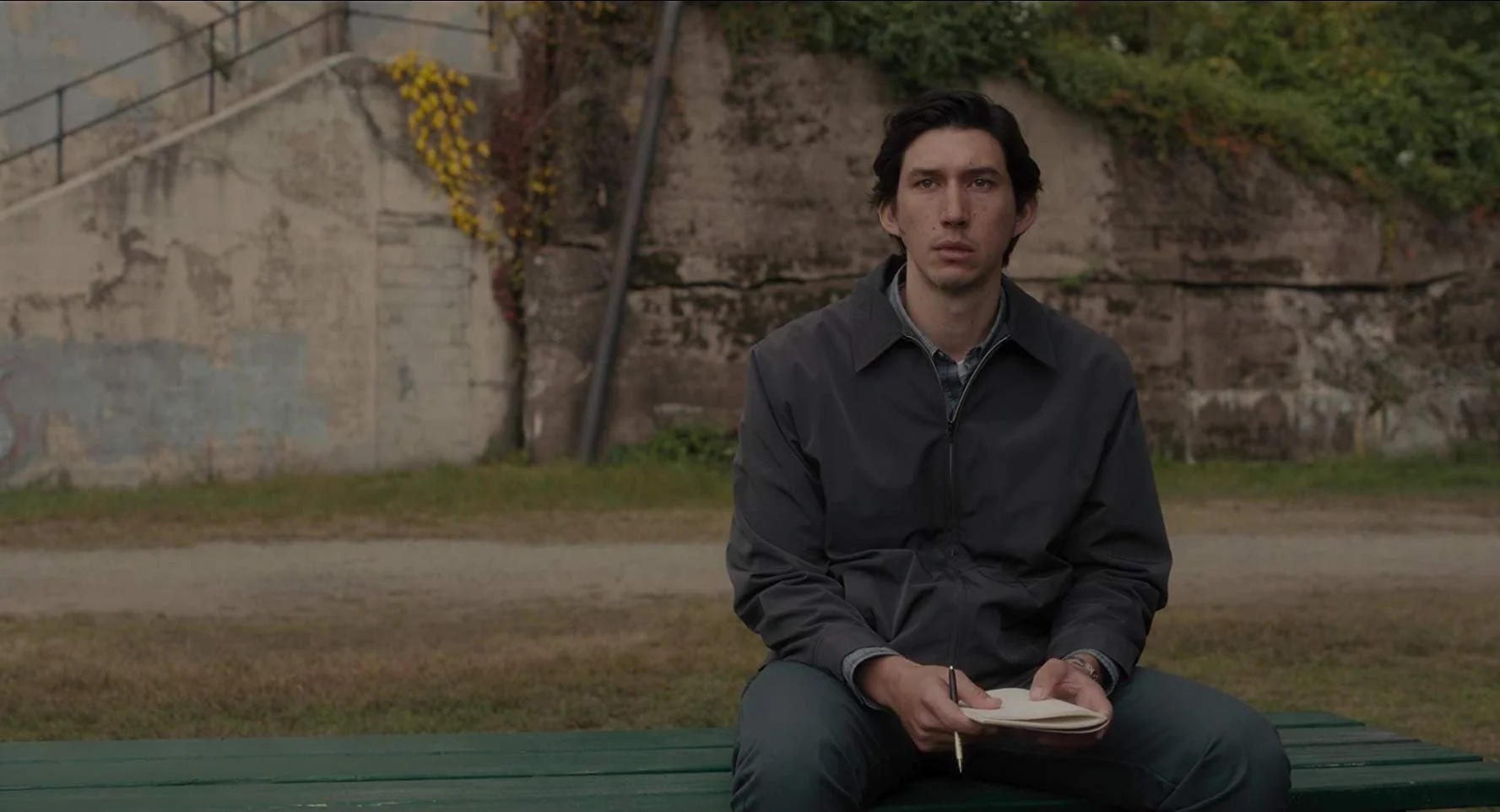
Aqui, encontramos em Paterson (2016), de Jim Jarmusch, uma das suas expressões mais depuradas. Aqui, a escrita não surge como profissão nem como ambição pública, mas como exercício diário de presença. Paterson é motorista de autocarro na cidade de Paterson, Nova Jérsia. Conduz pelas mesmas ruas, escuta fragmentos de conversas, observa o mundo na sua escala mínima. E escreve. Escreve antes de trabalhar, escreve na pausa do almoço, escreve à noite. Não publica, não exibe, não performa. Escreve porque escrever é a forma que encontrou de habitar o real com atenção.
Esta ética da atenção tem uma raiz precisa: William Carlos Williams. O poeta modernista viveu e exerceu medicina exatamente na cidade de Paterson e escreveu o longo poema Paterson, onde procurava fazer da cidade um organismo poético feito de vozes, fluxos e matéria concreta. A sua máxima implícita — “no ideas but in things” — atravessa o filme como princípio invisível. Nenhuma ideia que não nasça das coisas. Nenhuma abstração desligada da experiência.
Paterson escreve sobre uma caixa de fósforos, sobre um copo de cerveja, sobre o cabelo de Laura, sobre a água que corre nas Great Falls. A poesia não é transcendência; é concentração. Não é fuga; é fidelidade ao que está diante dos olhos. Como Williams, também ele mantém uma vida “comum”, escreve entre tarefas, permanece enraizado no seu território. A grandeza não está na expansão, mas na precisão.
Os poemas que ouvimos no filme foram escritos por Ron Padgett, mas dialogam claramente com essa tradição: linguagem clara, imagética direta, lirismo contido. O filme não adapta o poema Paterson; encarna o seu método. Homem, cidade e linguagem espelham-se num jogo de duplicações subtis. Paterson vive em Paterson e escreve Paterson. O nome torna-se estrutura.
A própria forma cinematográfica acompanha essa poética. A semana repete-se com pequenas variações. Os planos regressam como versos. O texto surge no ecrã não como ilustração, mas como camada visual que respira com a imagem. O quotidiano é elevado sem dramatização excessiva. O extraordinário não irrompe — insinua-se. Quando o caderno onde guarda os poemas se perde, o choque não é apenas narrativo; é ontológico. Perde-se o arquivo de si. No entanto, o filme recusa a tragédia. Um encontro inesperado com outro poeta reabre a possibilidade do gesto inaugural. A escrita não está no acúmulo, mas na continuidade do impulso. A página pode recomeçar. A identidade não é aquilo que já foi escrito, mas aquilo que ainda pode ser escrito.
Neste sentido, Paterson torna-se mais do que um filme sobre poesia. É uma meditação sobre a escrita como prática de ser-no-mundo. Escrever é prestar atenção. É aceitar que o real contém já matéria suficiente para o assombro, se o olharmos com rigor e delicadeza.
Tal como a oficina propõe, não se trata de escrever para provar algo, mas para construir um lugar habitável dentro de si. Paterson não procura glória nem validação. Procura justeza. E nessa justeza encontra sentido. O gesto repetido da escrita torna-se ritual silencioso — uma forma de pensar, e ao mesmo tempo, de existir.
(Curadoria de Alexandre Braga)
_ENG
PENSO LOGO ESCREVO (I THINK, THEREFORE I WRITE) is the name of the Creative Writing Workshop proposed by PROSA as a space for inner listening and the creation of fiction, starting from a focus on narratology and the representation of reality. It is an invitation to practice a form of writing that puts us in touch with the ‘self’ — that being who sometimes reveals itself within us, sometimes in the other — building language as one would build a place. Writing is a gesture of search, a quest for being. A liberated act that, beyond enhancing communication skills, stands as a tool for care, resistance, and self-reinvention. In a world increasingly demanding of creativity, writing also becomes a means of survival — emotional, symbolic, and at times, physical.
Here, we encounter in Paterson (2016), by Jim Jarmusch, one of its most distilled expressions. Writing does not appear as a profession nor as a public ambition, but as a daily exercise in presence. Paterson is a bus driver in the city of Paterson, New Jersey. He drives the same streets, listens to fragments of overheard conversations, observes the world at its smallest scale. And he writes. He writes before work, writes during his lunch break, writes at night. He does not publish, does not display, does not perform. He writes because writing is the way he has found to inhabit reality attentively.
This ethics of attention has a precise root: William Carlos Williams. The modernist poet lived and practiced medicine in the city of Paterson and wrote the long poem Paterson, in which he sought to make the city itself a poetic organism composed of voices, flows, and concrete matter. His implicit maxim — “no ideas but in things” — runs through the film as an invisible principle. No idea that does not arise from things. No abstraction detached from experience.
Paterson writes about a box of matches, a glass of beer, Laura’s hair, the water flowing through the Great Falls. Poetry is not transcendence; it is concentration. Not escape, but fidelity to what stands before the eyes. Like Williams, he maintains an “ordinary” life, writes between tasks, remains rooted in his territory. Greatness lies not in expansion, but in precision.
The poems we hear in the film were written by Ron Padgett, yet they clearly dialogue with this tradition: clear language, direct imagery, restrained lyricism. The film does not adapt the poem Paterson; it embodies its method. Man, city, and language mirror one another in a subtle play of duplications. Paterson lives in Paterson and writes Paterson. The name becomes structure.
The film’s very form follows this poetics. The week repeats itself with slight variations. Shots return like verses. Text appears on screen not as illustration, but as a visual layer breathing alongside the image. The everyday is elevated without excessive dramatization. The extraordinary does not erupt — it insinuates itself. When the notebook in which he keeps his poems is lost, the shock is not merely narrative; it is ontological. The archive of the self disappears. And yet the film refuses tragedy. An unexpected encounter with another poet reopens the possibility of the inaugural gesture. Writing does not reside in accumulation, but in the continuity of impulse. The page can begin again. Identity is not what has already been written, but what may still be written.
In this sense, Paterson becomes more than a film about poetry. It is a meditation on writing as a practice of being-in-the-world. To write is to pay attention. It is to accept that reality already contains sufficient material for wonder, if we look at it with rigor and delicacy.
As the workshop proposes, writing is not about proving something to the world, but about constructing an inhabitable interior place. Paterson does not seek glory or validation. He seeks rightness. And in that rightness he finds meaning. The repeated gesture of writing becomes a silent ritual — a way of thinking and, at the same time, of existing.
(Curatorship of Alexandre Braga)
Ciclo PENSO LOGO ESCREVO IV
[I THINK, THEREFORE I WRITE IV Cinema Screenings] (Curadoria de Alexandre Braga)
“PATERSON” 2016 | M/12 | 1h58’ [US\DE\FR]
De Jim Jarmusch
Sexta Dia 06/03 às 19h30 [Friday 03/06 at 7:30pm]
Uma observação silenciosa dos triunfos e derrotas da vida quotidiana, bem como da poesia que se revela nos seus mais pequenos detalhes.
A quiet observation of the triumphs and defeats of daily life, along with the poetry evident in its smallest details.
Spoken in English | Subtitled in Portuguese
Todos os filmes do Cinema PROSA serão exibidos em pixel iluminado (ecrã QLED 65’’) em sala condicionada ao máximo de 24 espectadores.
Preçário
Membros: Entrada livre.
Não-membros: 3€
All Cinema PROSA films will be shown on an illuminated pixel (65’’ QLED screen) in a room with a maximum capacity of 24 spectators.
Prices
Members: Free Entry.
Non-members: Suggested donation of 3€.
Trailers: