

Conversas com Cinema© PROSA
Ciclo
OUTRA FÉ
[OTHER FAITH Cinema Screenings]
Curadoria de Alexandre Braga
OUTRA FÉ nasce de uma pergunta antiga e sempre renovada: o que acontece quando a linguagem religiosa deixa de ser apenas tradição herdada e volta a ser experiência interior? Durante séculos, os símbolos da fé foram concebidos como caminhos de transformação do ser — imagens, gestos e narrativas destinados a provocar uma deslocação íntima. Mas quando esses símbolos se tornam apenas estruturas exteriores, instituições ou discursos que nos precedem, o risco é que a história religiosa deixe de ser um caminho de revelação e passe a funcionar como um guião que fala por nós.
Este ciclo reúne dois filmes raros que interrogam precisamente esse ponto de fratura: o momento em que a fé institucional deixa de coincidir com a verdade vivida.
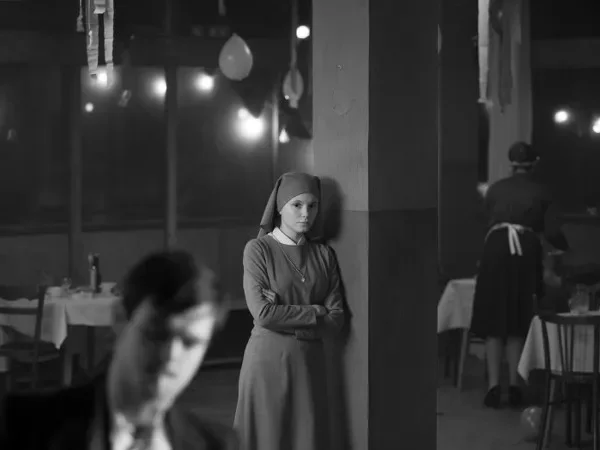
Em Ida (2013), de Paweł Pawlikowski, uma jovem noviça na Polónia dos anos 1960 descobre, antes de tomar os votos, que pertence a uma família judaica marcada pela tragédia do Holocausto. A viagem que inicia com a sua tia não é apenas histórica ou familiar — é uma travessia espiritual onde a identidade religiosa herdada entra em conflito com a experiência concreta do mundo. O filme, austero e silencioso, coloca a fé perante aquilo que nenhuma doutrina consegue absorver completamente: a verdade do passado, do corpo e da história.
Já em First Reformed (2017), de Paul Schrader, encontramos um pastor protestante que começa a confrontar-se com uma crise espiritual profunda diante da destruição ambiental e do cinismo das instituições religiosas contemporâneas. O diário que escreve — eco distante de Diary of a Country Priest ou mesmo de Taxi Driver, que o próprio Schrader escreveu — transforma-se numa espécie de laboratório interior onde a fé é colocada à prova. Aqui, acreditar já não é obedecer a uma estrutura, mas atravessar uma noite escura onde a religião pode tanto salvar como destruir.
Entre estes dois filmes abre-se um território delicado: o espaço onde as narrativas religiosas deixam de ser autoridade absoluta e voltam a ser perguntas. Talvez seja precisamente aí que nasce outra fé — não uma fé imposta, mas uma fé que precisa passar pelo crivo da consciência individual. Uma fé que não nos substitui, nem fala em nosso lugar, mas que nos obriga a confrontar o lugar mais íntimo da nossa própria verdade.
Porque as narrativas — religiosas ou não — têm sempre esse poder ambíguo: podem iluminar o caminho interior ou podem tornar-se sistemas que nos colonizam.
A questão essencial permanece a mesma que atravessa tanto o cinema como a filosofia: como habitar uma narrativa sem deixar de habitar a nós próprios?
Talvez estes dois filmes proponham justamente isso: não abandonar a linguagem simbólica da fé, mas reaprendê-la a partir da experiência viva — onde cada gesto, cada dúvida e cada silêncio voltam a pertencer ao sujeito que os vive.
(Curadoria de Alexandre Braga)
_ENG
OTHER FAITH begins with an ancient yet ever-renewed question: what happens when religious language ceases to be merely an inherited tradition and once again becomes an inner experience? For centuries, the symbols of faith were conceived as instruments of transformation — images, gestures and narratives meant to provoke an intimate shift within the human being. Yet when these symbols harden into external structures — institutions, doctrines, inherited narratives that precede us — a risk emerges: religious storytelling may cease to be a path of revelation and instead become a script that speaks in our place.
This cycle brings together two remarkable films that explore precisely this fracture — the moment when institutional faith no longer coincides with lived truth.
In Ida (2013), by Paweł Pawlikowski, a young novice in 1960s Poland discovers, just before taking her vows, that she belongs to a Jewish family scarred by the Holocaust. The journey she undertakes with her aunt is not merely historical or familial — it is a spiritual crossing in which inherited religious identity confronts the raw complexity of the world. The film’s austere and contemplative style places faith before what no doctrine can fully contain: the truth of history, of the body, and of memory.
In First Reformed (2017), by Paul Schrader, a Protestant pastor enters a profound spiritual crisis as he confronts the ecological devastation of the contemporary world and the moral complacency of religious institutions. The diary he keeps — echoing Robert Bresson’s Diary of a Country Priest, and even resonating with the solitary introspection of Taxi Driver, which Schrader himself wrote — becomes a laboratory of the soul, where faith is tested against despair, responsibility and action. Here, belief is no longer obedience to a structure but a passage through a dark interior night where religion may either redeem or destroy.
Between these two films emerges a fragile and necessary territory: the space where religious narratives cease to function as unquestioned authority and return to their original condition — questions.
Perhaps this is precisely where another faith begins: not a faith imposed from the outside, but one that must pass through the filter of individual consciousness. A faith that does not replace us or speak in our stead, but compels us to confront the most intimate ground of our own truth.
Narratives — religious or otherwise — always carry this ambivalent power: they can illuminate the inner path, or they can become systems that colonize it.
The essential question therefore remains the same one that haunts both cinema and philosophy: how can we inhabit a narrative without ceasing to inhabit ourselves?
These two films may suggest a possible answer: not abandoning the symbolic language of faith, but rediscovering it through lived experience — where every gesture, every doubt and every silence once again belongs to the subject who lives it.
(Curatorship by Alexandre Braga)
“IDA” 2013 | M/12 | 1h22’ [PL\DK]
De Pawel Pawlikowski
Sexta Dia 29/05 às 19h30 [Friday 05/29 at 7:30pm]
Na Polónia dos anos 1960, uma jovem noviça descobre que é judia e parte com a sua tia numa viagem para descobrir o destino da família durante o Holocausto. O percurso torna-se uma busca silenciosa por identidade e fé.
In 1960s Poland, a novice nun discovers she is Jewish and travels with her aunt to uncover the fate of her family during the Holocaust. The journey becomes a quiet search for identity and faith.
Spoken in Polish | Subtitled in English
“FIRST REFORMED” 2017 | M/16 | 1h53’ [US\UK\AU] (No Coração da Escuridão - PT)
De Paul Schrader
Sábado Dia 30/05 às 19h30 [Saturday 05/30 at 7:30pm]
Um pastor protestante atormentado pela culpa e pela doença conhece um ativista ambiental em desespero. O encontro desencadeia uma crise espiritual onde fé, responsabilidade e desespero contemporâneo colidem.
A Protestant minister burdened by guilt and illness meets a despairing environmental activist. Their encounter triggers a spiritual crisis where faith, responsibility, and modern despair collide.
Spoken in English | Subtitled in Portuguese
Todos os filmes do Cinema PROSA serão exibidos em pixel iluminado (ecrã QLED 65’’) em sala condicionada ao máximo de 24 espectadores.
Preçário
Membros: Entrada livre.
Não-membros: Donativo sugerido de 3€
All Cinema PROSA films will be shown on an illuminated pixel (65’’ QLED screen) in a room with a maximum capacity of 24 spectators.
Prices
Members: Free Entry.
Non-members: Suggested donation of 3€.
Trailers: