

Conversas com Cinema© PROSA
Ciclo
OS RITUAIS DO CINEMA III
[THE RITUALS OF CINEMA III Cinema Screenings]
Há rituais que não procuram resolver o mundo, mas habitar o mistério da identidade. Gestos que não se dirigem ao exterior, mas àquilo que vibra entre o eu e o outro, entre a máscara e o rosto, entre o visível e o invisível. Neste terceiro ciclo, Os Rituais do Cinema desloca-se para um território mais íntimo e instável: o da duplicação e da metamorfose. O que acontece quando a identidade se revela frágil, permeável, multiplicável? E que ritual pode sustentar essa instabilidade?
LA DOUBLE VIE DE VÉRONIQUE (1991), de Krzysztof Kieślowski, é um ritual de escuta. Duas mulheres, em dois países distintos, vivem como se partilhassem uma mesma respiração secreta. Não se conhecem, mas pressentem-se. O filme constrói-se como uma liturgia da intuição: filtros verdes, reflexos, repetições, música que atravessa corpos. Véronique abandona o canto não por cálculo, mas por pressentimento — como se obedecesse a um fio invisível que a preserva de um destino já vivido pela sua outra. O seu ritual é deliberado e silencioso: escutar aquilo que não tem nome, confiar na vibração anterior à palavra. Aqui, o cinema torna-se espaço de suspensão — não para explicar o duplo, mas para o deixar ressoar.
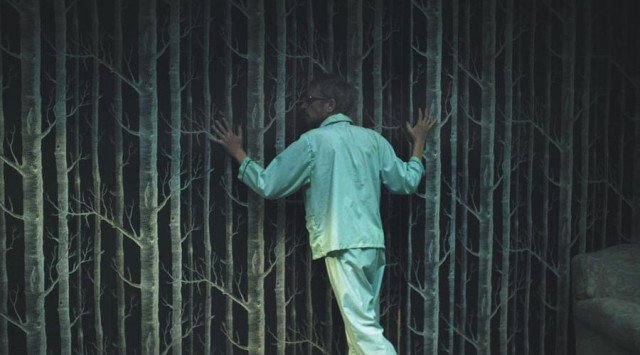
No dia seguinte, HOLY MOTORS (2012), de Leos Carax, propõe um ritual fragmentado e oposto: o da metamorfose incessante. Um homem percorre a cidade dentro de uma limusina, assumindo sucessivas identidades, como se cumprisse um calendário litúrgico de performances. Cada transformação é um ato completo — figurino, encenação, entrega — seguido de regresso ao espaço neutro do veículo, essa espécie de sacristia móvel. Aqui, o ritual é mimético: não escuta o invisível, mas encarna o visível até à exaustão. O filme interroga a própria natureza da representação: para quem se atua? Quem observa? Que comunidade sustenta o gesto? Se em Kieślowski o duplo é mistério ontológico, em Carax a multiplicidade é vertigem performativa.
Ambos os filmes partilham uma inquietação comum: como permanecer uno quando a identidade se fragmenta? LA DOUBLE VIE DE VÉRONIQUE responde com a delicadeza da sintonia interior; HOLY MOTORS com a radicalidade da máscara assumida. Entre o recolhimento e a exibição, entre o pressentimento e a performance, o espectador é convocado a reconhecer a sua própria condição — também nós alternamos papéis, também nós intuimos presenças que não compreendemos.
Assistir a um filme é, afinal, um ritual de desdobramento. Entramos na sala como um só e saímos atravessados por múltiplas vidas. Talvez seja nesse movimento — entre o rosto que somos e as máscaras que vestimos — que o cinema continua a operar a sua força mais subtil: lembrar-nos que a identidade não é um ponto fixo, mas uma travessia.
(Curadoria de Alexandre Braga)
_ENG
There are rituals that do not seek to resolve the world, but to inhabit the mystery of identity. Gestures that turn not outward, but toward what vibrates between the self and the other, between mask and face, between the visible and the invisible. In this third cycle, The Rituals of Cinema moves into a more intimate and unstable territory: that of duplication and metamorphosis. What happens when identity reveals itself as fragile, permeable, multiple? And what kind of ritual can sustain such instability?
LA DOUBLE VIE DE VÉRONIQUE (1991), directed by Krzysztof Kieślowski, is a ritual of listening. Two women, in two different countries, live as if they shared a secret breath. They do not know each other, yet they sense one another. The film unfolds as a liturgy of intuition: green filters, reflections, repetitions, music passing through bodies. Véronique abandons her singing career not out of calculation, but out of premonition — as if obeying an invisible thread that preserves her from a destiny already lived by her other. Her ritual is deliberate and silent: to listen to what has no name, to trust the vibration that precedes language. Here, cinema becomes a space of suspension — not to explain the double, but to let it resonate.
The following day, HOLY MOTORS (2012), directed by Leos Carax, proposes an opposite and fragmented ritual: that of incessant metamorphosis. A man travels across the city inside a limousine, assuming successive identities as if fulfilling a liturgical calendar of performances. Each transformation is a complete act — costume, embodiment, surrender — followed by a return to the neutral space of the vehicle, a kind of mobile sacristy. Here, ritual is mimetic: it does not listen to the invisible, but incarnates the visible to the point of exhaustion. The film questions the very nature of representation: for whom does one perform? Who is watching? What community sustains the gesture? If in Kieślowski the double is an ontological mystery, in Carax multiplicity becomes performative vertigo.
Both films share a common unrest: how can one remain whole when identity fractures? LA DOUBLE VIE DE VÉRONIQUE responds with the delicacy of inner attunement; HOLY MOTORS with the radical embrace of the mask. Between withdrawal and exhibition, between premonition and performance, the spectator is invited to recognize their own condition — we too alternate roles, we too sense presences we cannot fully comprehend.
(Curatorship by Alexandre Braga)
“LA DOUBLE VIE DE VÉRONIQUE” 1991 | M/12 | 1h38’ [FR\PL\NO] (The Double Life of Véronique - ENG)
De Krzysztof Kieslowski
Sexta Dia 20/03 às 19h30 [Friday 03/20 at 7:30pm]
Duas histórias paralelas sobre duas mulheres idênticas: uma vive na Polónia, a outra em França. Elas não se conhecem, mas as suas vidas estão,
ainda assim, profundamente ligadas.
Two parallel stories about two identical women; one living in Poland, the other in France. They don't know each other, but their lives are nevertheless profoundly connected.
Spoken in French and Polish | Subtitled in English
“HOLY MOTORS” 2012 | 1h55’ [DE\FR]
De Leos Carax
Sábado Dia 21/03 às 19h30 [Saturday 03/21 at 7:30pm]
Um homem entra numa limusina que o levará ao trabalho do dia: nove misteriosos “compromissos”.
A man boards a limousine to be driven to his day's work: nine mysterious "appointments."
Spoken in French, English | Subtitled in English
Todos os filmes do Cinema PROSA serão exibidos em pixel iluminado (ecrã QLED 65’’) em sala condicionada ao máximo de 24 espectadores.
Preçário
Membros: Entrada livre.
Não-membros: Donativo sugerido de 3€
All Cinema PROSA films will be shown on an illuminated pixel (65’’ QLED screen) in a room with a maximum capacity of 24 spectators.
Prices
Members: Free Entry.
Non-members: Suggested donation of 3€.
Trailers: