Conversas com Cinema© PROSA
Ciclo
CINEMA QUOTING CINEMA II
[CINEMA QUOTING CINEMA II Cinema Screenings]
Curadoria de Alexandre Braga
Há filmes que permanecem na memória pela força das suas imagens. Outros sobrevivem porque continuam a reaparecer, discretamente, dentro de novos filmes. O cinema é, desde a sua origem, uma arte construída sobre a memória: cita, transforma, revisita e recria. Cada nova obra estabelece um diálogo silencioso com aquelas que a precederam.
É desse princípio que nasce o ciclo CINEMA QUOTING CINEMA, um espaço dedicado à descoberta das relações invisíveis que unem diferentes obras cinematográficas. Mais do que identificar influências, interessa-nos compreender como determinadas ideias atravessam o tempo, são reinterpretadas e regressam sob novas formas. O cinema torna-se, assim, uma grande conversação entre imagens, realizadores e épocas distintas.
Nesta segunda edição, colocamos em diálogo Blind Chance (1987), de Krzysztof Kieślowski, e Sliding Doors (1998), de Peter Howitt. Separados por uma década, os dois filmes partem da mesma pergunta: até que ponto um único instante pode alterar o curso de uma vida?
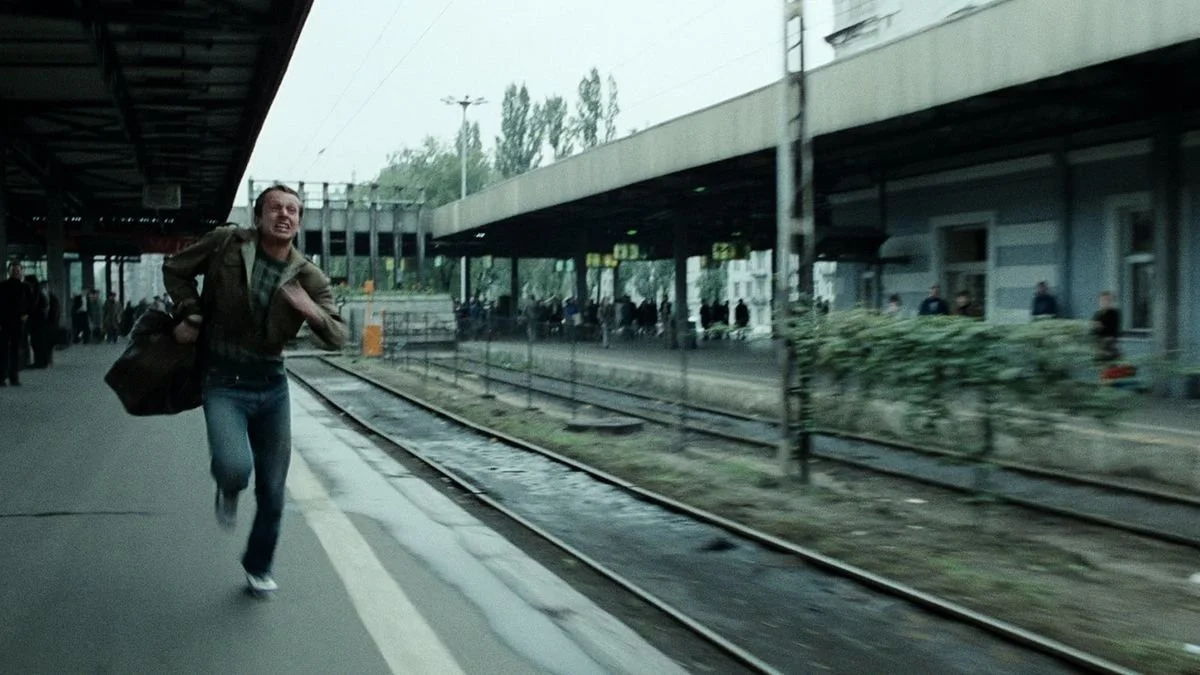
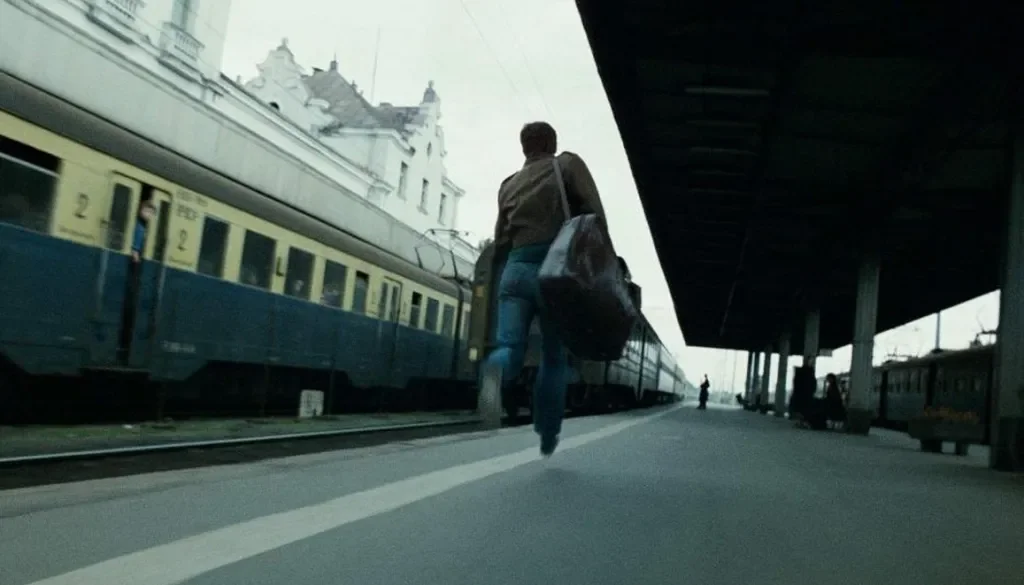
Em Blind Chance, Kieślowski acompanha Witek, um jovem estudante que corre para apanhar um comboio. A partir desse gesto aparentemente banal, o filme desdobra-se em três narrativas distintas, revelando como o acaso pode conduzir a destinos radicalmente diferentes. Mais do que um exercício formal, o realizador polaco constrói uma profunda reflexão sobre a liberdade, a responsabilidade individual e a influência das circunstâncias históricas nas escolhas humanas.
Onze anos depois, Sliding Doors recupera uma estrutura semelhante para contar a história de Helen, uma mulher cuja vida se divide em duas possibilidades paralelas após perder — ou conseguir apanhar — uma composição do metro londrino. Peter Howitt transforma a reflexão filosófica de Kieślowski numa narrativa mais acessível, sem abdicar da pergunta essencial: seremos os autores do nosso destino ou habitamos apenas uma sucessão imprevisível de acontecimentos?
Ao aproximar estas duas obras, o ciclo convida-nos a pensar o cinema como um território de reescrita permanente. Não se trata apenas de reconhecer semelhanças narrativas, mas de compreender como uma ideia pode atravessar diferentes geografias, culturas e sensibilidades, gerando novas leituras e novos significados.
Talvez seja precisamente nesse movimento que o cinema revela uma das suas características mais fascinantes: a capacidade de regressar continuamente às mesmas perguntas, sabendo que cada época encontrará respostas diferentes.
(Curadoria de Alexandre Braga)
_ENG
Some films remain in our memory because of the power of their images. Others endure because they continue to reappear, discreetly, within new films. Since its very beginnings, cinema has been an art built upon memory: it quotes, transforms, revisits, and recreates. Every new work establishes a silent dialogue with those that came before it.
This idea lies at the heart of CINEMA QUOTING CINEMA, a film series dedicated to exploring the invisible connections that link different cinematic works. Rather than simply identifying influences, our aim is to understand how certain ideas travel through time, are reinterpreted, and return in new forms. Cinema thus becomes an ongoing conversation between images, filmmakers, and different historical moments.
In this second edition, we bring together Blind Chance (1987), directed by Krzysztof Kieślowski, and Sliding Doors (1998), directed by Peter Howitt. Although separated by more than a decade, both films begin with the same question: to what extent can a single moment alter the course of a life?
In Blind Chance, Kieślowski follows Witek, a young medical student running to catch a train. From this seemingly insignificant gesture, the film unfolds into three different narratives, revealing how chance can lead to radically different destinies. More than a formal experiment, the Polish filmmaker creates a profound reflection on freedom, individual responsibility, and the influence of historical circumstances on human choices.
Eleven years later, Sliding Doors revisits a remarkably similar narrative structure to tell the story of Helen, a woman whose life splits into two parallel possibilities depending on whether she misses or catches a London Underground train. Peter Howitt transforms Kieślowski's philosophical inquiry into a more accessible narrative while preserving its essential question: are we truly the authors of our own destiny, or do our lives simply unfold through an unpredictable sequence of events?
By bringing these two films into conversation, this cycle invites us to think of cinema as a space of continuous rewriting. It is not merely a matter of recognising narrative similarities, but of understanding how an idea can travel across different cultures, geographies, and artistic sensibilities, generating new interpretations and new meanings.
Perhaps this movement reveals one of cinema's most fascinating qualities: its ability to return repeatedly to the same fundamental questions, while allowing each era to discover entirely different answers.
(Curatorship by Alexandre Braga)
“BLIND CHANCE” 1987 | M/12 | 2h02’ [PL] (Przypadek - PL | Acaso Cego - PT)
De Krzysztof Kieślowski
Sexta Dia 25/09 às 19h30 [Friday 09/25 at 7:30pm]
Witek corre para apanhar um comboio. A partir desse gesto aparentemente banal, o filme acompanha três possibilidades distintas, revelando como um único instante pode alterar profundamente o rumo de uma vida.
Witek runs after a train. Three variations follow on how such a seemingly banal incident could influence the rest of Witek's life.
Spoken in Polish | Subtitled in English
“SLIDING DOORS” 1998 | 1h39’ [US/UK] (Instantes Decisivos - PT)
De Peter Howitt
Sábado Dia 26/09 às 19h30 [Saturday 09/26 at 7:30pm]
Após enfrentar vários reveses pessoais e profissionais, uma mulher vê a sua vida desdobrar-se numa realidade alternativa.
After personal and professional setbacks, a woman experiences an alternate reality.
Spoken in English | Subtitled in Portuguese
Todos os filmes do Cinema PROSA serão exibidos em pixel iluminado (ecrã QLED 65’’) em sala condicionada ao máximo de 24 espectadores.
Preçário
Membros: Entrada livre.
Não-membros: Donativo sugerido de 3€
All Cinema PROSA films will be shown on an illuminated pixel (65’’ QLED screen) in a room with a maximum capacity of 24 spectators.
Prices
Members: Free Entry.
Non-members: Suggested donation of 3€.
Trailers: