

Conversas com Cinema© PROSA
Ciclo
MICHAEL NYMAN:
PULSO E TRANSE
[MICHAEL NYMAN: PULSE AND TRANCE Cinema Screenings]
O ciclo MICHAEL NYMAN: Pulso e Transe propõe uma escuta cinematográfica: olhar o cinema a partir de um compositor. À semelhança de outros percursos já explorados — o recente Peter Gabriel, ou Jóhann Jóhannsson ou Philip Glass —, aqui a música não ilustra; estrutura o tempo, instala um estado, cria um regime de respiração entre imagem e espectador. Em Nyman, o pulso não é mero ritmo: é insistência, retorno, é o som do corpo: cíclico, variação mínima que conduz ao transe.
Antes de se tornar um nome incontornável do cinema, Michael Nyman constrói uma carreira singular como compositor, musicólogo e pensador da música minimalista. A colaboração com Peter Greenaway marca decisivamente esse percurso: filmes como The Draughtsman’s Contract ou Prospero’s Books afirmam uma música geométrica, repetitiva, quase arquitectónica — uma música que pensa, mede e comenta a imagem, em tensão constante com ela.
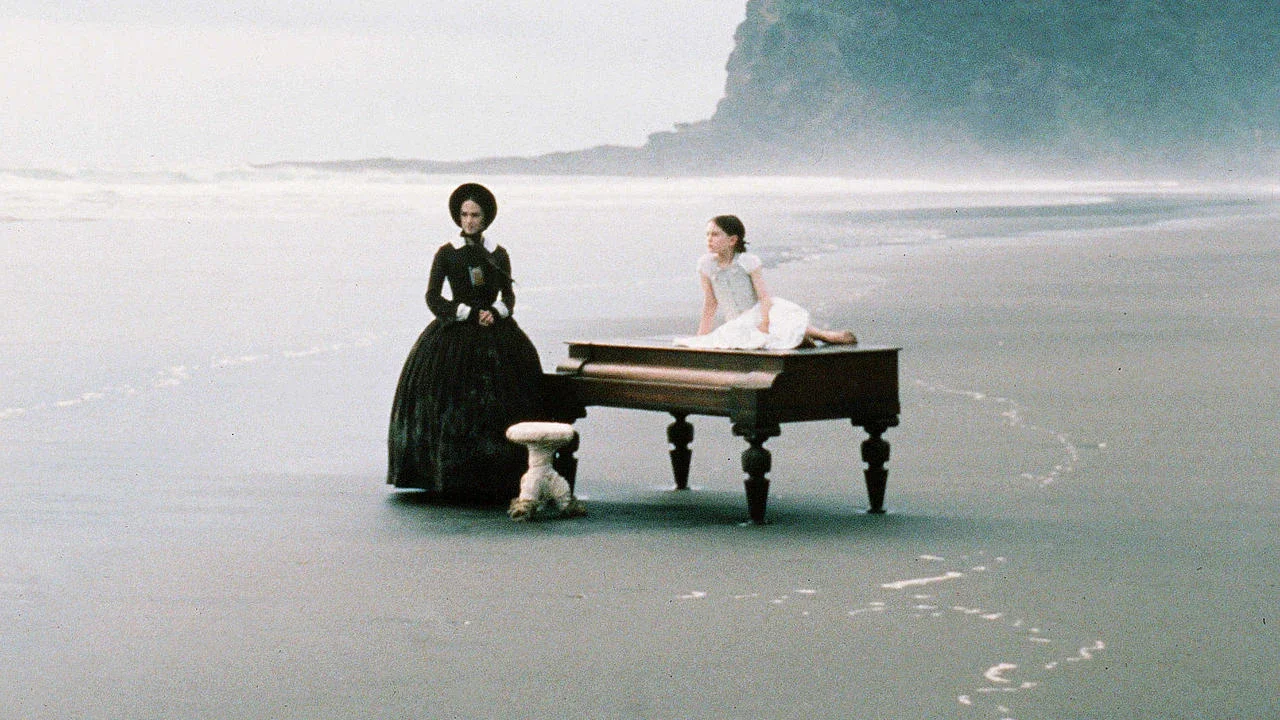
Com The Piano (1993), algo se desloca e se expande. A partitura de Nyman torna-se simultaneamente atmosfera emocional e elemento diegético: o piano não acompanha a personagem — é a sua voz. A música emerge do corpo, do gesto, da matéria do filme, atravessando silêncio, desejo e repressão. Poucas bandas sonoras na história do cinema alcançaram esta fusão tão orgânica entre narrativa, personagem e escuta; aqui, a música não sublinha o drama — ela é e potencia o drama.
Já em Gattaca (1997), Nyman trabalha o futuro como destino interior. Num mundo governado por códigos genéticos e previsões estatísticas, a sua música introduz uma fissura poética: um pulso que resiste, uma melancolia que insiste contra a lógica da perfeição. As cordas repetitivas, anacrónicas e ascendentes transformam o gesto humano — correr, sonhar, ultrapassar limites — num ato quase ritual. Em Gattaca, o transe não é fuga: é perseverança.
No conjunto, este ciclo revela Michael Nyman como um compositor do limiar: entre cálculo e emoção, entre repetição e revelação. Em The Piano, a música encarna o indizível; em Gattaca, sustenta o impossível. Duas obras, dois mundos, um mesmo gesto essencial — o de usar o pulso como forma de resistência ao silêncio, ao determinismo e à anestesia do sensível.
Escutar Nyman é aceitar que o cinema também se pensa com o corpo, no intervalo hipnótico entre o tempo que passa e o tempo que insiste em eternizar o momento.
(Curadoria de Alexandre Braga)
_ENG
MICHAEL NYMAN: Pulse and Trance proposes a cinematic mode of listening: approaching cinema through a composer. In line with other paths already explored — the recent Peter Gabriel cycle, as well as Jóhann Jóhannsson and Philip Glass — music here does not illustrate; it structures time, establishes a state, and creates a breathing rhythm between image and spectator. In Nyman, pulse is not mere rhythm: it is insistence and return, the sound of the body itself — cyclical, minimally varied, leading toward trance.
Before becoming an indispensable name in cinema, Michael Nyman built a singular career as a composer, musicologist, and thinker of minimalist music. His collaboration with Peter Greenaway decisively shaped this trajectory: films such as The Draughtsman’s Contract and Prospero’s Books assert a geometric, repetitive, almost architectural music — a music that thinks, measures, and comments on the image, in constant tension with it.
With The Piano (1993), something shifts and expands. Nyman’s score becomes simultaneously emotional atmosphere and diegetic element: the piano does not accompany the character — it is her voice. The music emerges from the body, from gesture, from the very matter of the film, traversing silence, desire, and repression. Few film scores in the history of cinema have achieved such an organic fusion of narrative, character, and listening; here, music does not underscore the drama — it is and amplifies the drama.
In Gattaca (1997), Nyman treats the future as an inner destiny. In a world governed by genetic codes and statistical prediction, his music introduces a poetic fissure: a pulse that resists, a melancholy that persists against the logic of perfection. The repetitive, anachronistic, ascending strings transform the human gesture — running, dreaming, surpassing limits — into an almost ritual act. In Gattaca, trance is not escape: it is perseverance.
Taken together, this cycle reveals Michael Nyman as a composer of the threshold: between calculation and emotion, repetition and revelation. In The Piano, music embodies the unsayable; in Gattaca, it sustains the impossible. Two works, two worlds, one essential gesture — using pulse as a form of resistance to silence, determinism, and the anaesthesia of the sensible. To listen to Nyman is to accept that cinema is also thought through the body, in the hypnotic interval between time passing and time insisting on eternalising the moment.
(Curatorship by Alexandre Braga)
“THE PIANO” 1993 | M/16 | 2h01’ [NZ/AUS/FR] (O Piano - PT)
De Jane Campion
Sexta Dia 09/01 às 19h30 [Friday 01/09 at 7:30pm]
Uma mulher muda é enviada para a Nova Zelândia na década de 1850, juntamente com sua filha pequena e seu precioso piano para um casamento arranjado com um rico proprietário de terras, mas um trabalhador local na ganância da plantação.
A mute woman is sent to New Zealand in the 1850s, together with her young daughter and her precious piano, for an arranged marriage with a wealthy landowner. However, a local worker from the plantation becomes entangled in her life in unexpected ways.
Spoken in English | Subtitled in Portuguese
“GATTACA” 1997 | M/14 | 1h46’ [US]
De Andrew Niccol
Sábado Dia 10/01 às 19h30 [Saturday 01/10 at 7:30pm]
Numa futura sociedade distópica, onde a posição social é determinada pelas características genéticas, um homem geneticamente inferior assume a identidade de outro, com o objetivo de realizar seu sonho de se tornar astronauta.
In a future dystopian society where social status is determined by genetic traits, a genetically inferior man assumes someone else’s identity in order to fulfil his dream of becoming an astronaut.
Spoken in English | Subtitled in Portuguese
Todos os filmes do Cinema PROSA serão exibidos em pixel iluminado (ecrã QLED 65’’) em sala condicionada ao máximo de 24 espectadores.
Preçário
Membros: Entrada livre.
Não-membros: Donativo sugerido de 3€
All Cinema PROSA films will be shown on an illuminated pixel (65’’ QLED screen) in a room with a maximum capacity of 24 spectators.
Prices
Members: Free Entry.
Non-members: Suggested donation of 3€.
Trailers: